Data loss can be catastrophic for any business or individual. Whether you are managing a production server or a personal workstation, implementing a robust backup strategy is non-negotiable. This comprehensive guide will teach you everything you need to know about Linux backup automation 2026, focusing on two powerful built-in tools: rsync and cron. By the end of this tutorial, you will have a fully automated backup system that runs silently in the background, protecting your valuable data without any manual intervention.
Why Linux Backup Automation 2026 Matters
Manual backups are unreliable. People forget, get busy, or simply neglect this critical task. Linux backup automation 2026 ensures your data is consistently protected according to a schedule you define. With the increasing sophistication of cyber threats and the growing importance of data integrity, automated backups have become essential rather than optional.
The combination of rsync and cron provides a lightweight, efficient, and highly customizable solution. Unlike proprietary backup software that locks you into expensive subscriptions, these open-source tools give you complete control over your backup processes. Understanding Linux backup automation 2026 techniques will serve you well whether you are a system administrator, developer, or Linux enthusiast.
Understanding rsync: The Foundation of Smart Backups
Rsync is a fast and extraordinarily versatile file copying tool. It is famous for its delta-transfer algorithm, which reduces the amount of data sent over the network by sending only the differences between the source files and the existing files in the destination. This makes rsync incredibly efficient for backups, especially when dealing with large datasets or limited bandwidth.
The official rsync documentation at rsync.samba.org provides extensive details about advanced features, but we will cover the essential commands you need for effective Linux backup automation 2026 implementations.
Basic rsync Syntax
The fundamental rsync command structure follows this pattern:
rsync [options] source destinationFor local backups, the source and destination are directory paths. For remote backups, you can use SSH to transfer files securely to another server. Here is a basic example that copies files from your home directory to a backup location:
rsync -av ~/documents /backup/The -a flag stands for archive mode, which preserves permissions, symbolic links, and other file attributes. The -v flag enables verbose output, showing you which files are being transferred.
Essential rsync Options for Backups
When building your Linux backup automation 2026 strategy, these rsync options are particularly valuable:
--delete: Removes files from the destination that no longer exist in the source, keeping an exact mirror--exclude: Skips specific files or directories (useful for excluding cache files or temporary data)--progress: Shows progress during transfer-z: Compresses file data during transfer (helpful for remote backups)-e ssh: Uses SSH for secure remote transfers
Here is a more comprehensive example that excludes certain directories and deletes removed files:
rsync -av --delete --exclude='.cache' --exclude='Downloads' ~/ /backup/home/Mastering cron for Automated Scheduling
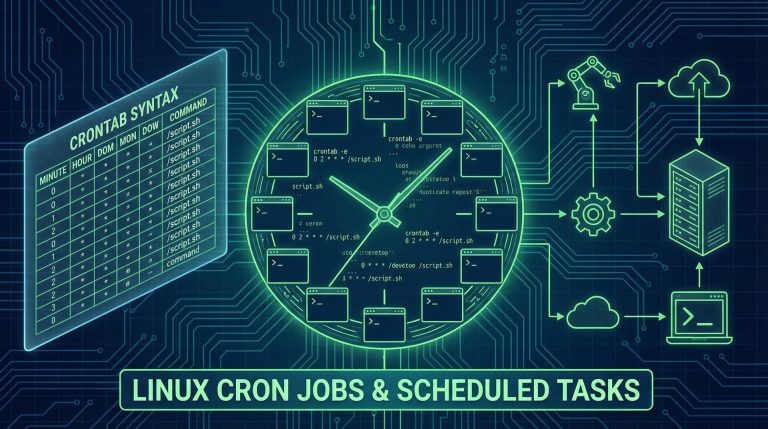
Cron is the time-based job scheduler in Unix-like operating systems. It enables you to run commands or scripts at specified times and intervals automatically. For Linux backup automation 2026, cron is the perfect companion to rsync, allowing you to schedule backups during off-peak hours or at regular intervals.
The GNU Project maintains cron as part of its essential system software suite. Most Linux distributions come with cron pre-installed, making it immediately available for your automation needs.
Understanding the Crontab Format
Cron jobs are defined in a crontab file using a specific syntax. Each line represents a job and follows this format:
* * * * * command_to_execute
│ │ │ │ │
│ │ │ │ └─── Day of week (0-7, where both 0 and 7 represent Sunday)
│ │ │ └───── Month (1-12)
│ │ └─────── Day of month (1-31)
│ └───────── Hour (0-23)
└─────────── Minute (0-59)
Here are some practical examples for your Linux backup automation 2026 setup:
# Run backup every day at 2:00 AM
0 2 * * * /home/user/scripts/backup.sh

# Run backup every Sunday at 3:30 AM
30 3 * * 0 /home/user/scripts/backup.sh

# Run backup every 6 hours
0 */6 * * * /home/user/scripts/backup.sh

# Run backup on the 1st of every month at midnight
0 0 1 * * /home/user/scripts/backup.sh
Editing Your Crontab
To add or modify cron jobs, use the crontab command:
# Edit the current user's crontab
crontab -e

# List current cron jobs
crontab -l

# Remove all cron jobs (use with caution)
crontab -r
When you first run crontab -e, you may be asked to select a text editor. Nano is usually the most user-friendly option for beginners.
Building a Complete Backup Script
Now let us combine rsync and cron into a complete Linux backup automation 2026 solution. A well-crafted backup script should handle logging, error checking, and notifications. Here is a production-ready example:
#!/bin/bash

# Linux Backup Automation 2026 - Complete Backup Script
# Author: System Administrator
# Date: 2026

# Configuration
SOURCE_DIR="/home/user/documents"
BACKUP_DIR="/backup/documents"
LOG_FILE="/var/log/backup.log"
DATE=$(date +"%Y-%m-%d_%H-%M-%S")

# Create backup directory if it doesn't exist
mkdir -p "$BACKUP_DIR"

# Start backup
echo "[$(date)] Starting backup..." >> "$LOG_FILE"

# Run rsync with error handling
if rsync -av --delete --exclude='*.tmp' --exclude='.cache' "$SOURCE_DIR/" "$BACKUP_DIR/" >> "$LOG_FILE" 2>&1; then
    echo "[$(date)] Backup completed successfully" >> "$LOG_FILE"
else
    echo "[$(date)] Backup failed with errors" >> "$LOG_FILE"
    # Optional: Send notification
    # echo "Backup failed" | mail -s "Backup Alert" admin@example.com
fi

# Clean up old backups (keep last 30 days)
find "$BACKUP_DIR" -type f -mtime +30 -delete 2>/dev/null

exit 0
Save this script as /home/user/scripts/backup.sh, make it executable with chmod +x /home/user/scripts/backup.sh, and then add it to your crontab for fully automated execution.
Advanced Linux Backup Automation 2026 Techniques
For more sophisticated backup strategies, consider implementing these advanced techniques in your Linux backup automation 2026 workflow:
Incremental Backups with Hard Links
Incremental backups save space by only storing changed files. Using rsync with hard links creates a full backup appearance while only consuming space for modified files:
#!/bin/bash

# Incremental backup with hard links
SOURCE="/home/user/"
BACKUP_BASE="/backup/incremental"
TODAY=$(date +%Y-%m-%d)
YESTERDAY=$(date -d yesterday +%Y-%m-%d 2>/dev/null || date -v-1d +%Y-%m-%d)

mkdir -p "$BACKUP_BASE/$TODAY"

rsync -av --delete --link-dest="$BACKUP_BASE/$YESTERDAY" "$SOURCE" "$BACKUP_BASE/$TODAY/"
Remote Backup Over SSH
Backing up to a remote server adds protection against local hardware failures. Ensure you have configured SSH key authentication for passwordless access:
# Backup to remote server
rsync -avz -e ssh ~/documents user@backup-server:/backups/myserver/

# Backup with specific SSH key
rsync -avz -e "ssh -i /home/user/.ssh/backup_key" ~/documents user@backup-server:/backups/
Backup Rotation Strategy
A good Linux backup automation 2026 strategy includes backup rotation. The grandfather-father-son approach keeps daily backups for a week, weekly backups for a month, and monthly backups for a year:
#!/bin/bash

# Backup rotation script
BACKUP_DIR="/backup/rotation"
DAY=$(date +%u)  # Day of week (1-7)
DATE=$(date +%Y-%m-%d)

# Daily backup (overwrites same day each week)
rsync -av --delete ~/documents "$BACKUP_DIR/daily/day$DAY/"

# Weekly backup on Sundays
if [ "$DAY" -eq 7 ]; then
    WEEK=$(date +%U)
    cp -al "$BACKUP_DIR/daily/day7" "$BACKUP_DIR/weekly/week$WEEK/"
fi

# Monthly backup on the 1st
if [ "$(date +%d)" -eq 01 ]; then
    MONTH=$(date +%Y-%m)
    cp -al "$BACKUP_DIR/daily/day$DAY" "$BACKUP_DIR/monthly/$MONTH/"
fi
Monitoring and Troubleshooting Your Backups
Even the best Linux backup automation 2026 setup requires monitoring. Here are essential practices to ensure your backups are working correctly:
Verify Backup Integrity
Regularly test your backups by restoring files to a temporary location:
# Test restore from backup
rsync -av /backup/documents/ /tmp/restore-test/

# Compare with source
diff -r ~/documents /tmp/restore-test/
Monitor Disk Space
Running out of disk space is a common cause of backup failures. Add disk space checks to your script:
#!/bin/bash

# Check available disk space
BACKUP_DIR="/backup"
THRESHOLD=90  # Alert if usage exceeds 90%

USAGE=$(df "$BACKUP_DIR" | awk 'NR==2 {print $5}' | sed 's/%//')

if [ "$USAGE" -gt "$THRESHOLD" ]; then
    echo "WARNING: Backup disk is ${USAGE}% full" | logger
    exit 1
fi

# Proceed with backup...
Review Backup Logs
Make reviewing logs part of your Linux backup automation 2026 maintenance routine:
# View recent backup log entries
tail -f /var/log/backup.log

# Search for errors
grep -i "error\|failed" /var/log/backup.log

# Check cron execution
grep CRON /var/log/syslog | tail -20
Security Considerations
Security is paramount when implementing Linux backup automation 2026 solutions. Follow these best practices to protect your backup data:
First, always encrypt sensitive backups, especially when storing them remotely or in the cloud. Tools like gpg or openssl can encrypt your backup archives before transfer.
Second, limit access to backup directories. Set appropriate permissions so only authorized users can read backup files:
# Set secure permissions on backup directory
chmod 700 /backup
chown root:root /backup
Third, when using SSH for remote backups, use dedicated keys with limited permissions and disable password authentication on your backup server. Learn more about essential Linux security commands to harden your backup infrastructure.
Best Practices for Linux Backup Automation 2026
To maximize the effectiveness of your backup strategy, follow these proven best practices:
Test your backups regularly. A backup you cannot restore is worthless. Schedule monthly restore tests to verify your data is recoverable.
Follow the 3-2-1 rule: Keep three copies of your data, on two different media types, with one copy stored offsite. This rule has saved countless organizations from data loss.
Document your backup procedures. If you are not available, others should be able to understand and maintain your Linux backup automation 2026 system. Keep documentation updated as your environment changes.
Monitor backup success and failures. Set up email or messaging alerts for failed backups. Do not rely on manual log checking alone.
Exclude unnecessary files. Cache files, temporary files, and browser data bloat backups and slow transfers. Use rsync’s --exclude option to skip them.
Conclusion
Implementing Linux backup automation 2026 with rsync and cron provides a powerful, flexible, and cost-effective solution for protecting your data. By following the techniques outlined in this guide, you can create a robust backup system that runs automatically, requires minimal maintenance, and keeps your data safe from loss or corruption.
Start with a simple daily backup, then gradually enhance your setup with incremental backups, remote copies, and monitoring. Remember that the best backup system is one that actually runs consistently without requiring constant attention. With rsync and cron working together, you achieve exactly that: reliable, automated protection for your valuable data.
Take action today. Set up your first automated backup job and gain peace of mind knowing your data is protected by proven, time-tested Linux tools.

Hi, I’m Mark, the author of Clever IT Solutions: Mastering Technology for Success. I am passionate about empowering individuals to navigate the ever-changing world of information technology. With years of experience in the industry, I have honed my skills and knowledge to share with you. At Clever IT Solutions, we are dedicated to teaching you how to tackle any IT challenge, helping you stay ahead in today’s digital world. From troubleshooting common issues to mastering complex technologies, I am here to guide you every step of the way. Join me on this journey as we unlock the secrets to IT success.