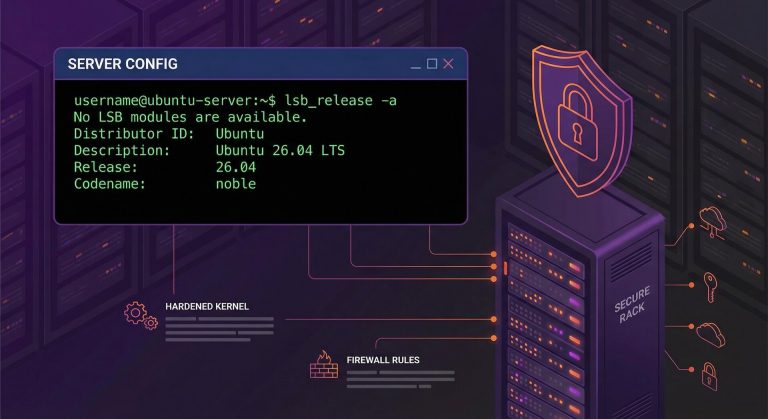
Learning how to configure UFW firewall Ubuntu systems is essential for every server administrator in 2026. UFW (Uncomplicated Firewall) provides a user-friendly interface to manage iptables firewall rules, protecting your Ubuntu server from unauthorized access and network attacks. This comprehensive guide walks you through everything you need to properly configure UFW firewall Ubuntu installations, from basic setup to advanced security configurations.
What is UFW and Why Use It?
UFW (Uncomplicated Firewall) was developed specifically to simplify firewall management on Ubuntu and Debian systems. While iptables provides powerful firewall capabilities, its complex syntax creates barriers for many administrators. When you configure UFW firewall Ubuntu servers, you get:
- Simple, intuitive command syntax
- Human-readable rule definitions
- Application profile integration
- IPv4 and IPv6 support by default
- Logging and monitoring capabilities
- Perfect balance between simplicity and power
UFW comes pre-installed on Ubuntu Server since version 18.04 LTS, making it the recommended firewall solution for Ubuntu-based infrastructure.
Prerequisites Before Configuring UFW
Before you configure UFW firewall Ubuntu systems, ensure you have:
- Ubuntu Server 20.04 LTS, 22.04 LTS, or 24.04 LTS
- Root or sudo access to the server
- Active SSH connection (IMPORTANT: don’t lose access!)
- List of services/ports you need to allow
- Backup access method (console, VNC, KVM) in case SSH gets blocked
For a complete Ubuntu server setup guide, see our tutorial on Ubuntu Server Initial Configuration 2026.
Step 1: Check UFW Installation Status
First, verify UFW is installed and check its current status:
sudo ufw status verboseYou’ll likely see “Status: inactive” on a fresh Ubuntu installation. If UFW isn’t installed:
sudo apt update
sudo apt install ufw
Check the UFW version:
sudo ufw versionStep 2: Set Default Firewall Policies
Default policies determine how UFW handles traffic that doesn’t match specific rules. Best practice: deny incoming, allow outgoing. To configure UFW firewall Ubuntu with secure defaults:
sudo ufw default deny incoming
sudo ufw default allow outgoing
This configuration:
- Blocks all incoming connections unless explicitly allowed
- Permits all outgoing connections for updates and external communication
- Protects against port scans and unauthorized access attempts
For maximum security, you can also restrict outgoing traffic:
sudo ufw default deny outgoingThen explicitly allow required outgoing connections (HTTP, HTTPS, DNS, etc.). This approach requires more configuration but provides complete traffic control.
Step 3: Allow SSH Access (CRITICAL!)
WARNING: Before enabling UFW, you MUST allow SSH access or you’ll lock yourself out!
Allow SSH on the default port (22):
sudo ufw allow sshOr specify the port number explicitly:
sudo ufw allow 22/tcpIf you use a custom SSH port (highly recommended), allow that instead:
sudo ufw allow 2222/tcpVerify the rule was added:
sudo ufw show addedFor enhanced SSH security, learn how to set up SSH key authentication on Ubuntu.
Step 4: Enable UFW Firewall
Once SSH access is allowed, enable UFW:
sudo ufw enableYou’ll see a warning about disrupting existing SSH connections. If you’re certain SSH is allowed, type ‘y’ and press Enter.
Verify UFW is active:
sudo ufw status verboseYou should see:
Status: active
Logging: on (low)
Default: deny (incoming), allow (outgoing), disabled (routed)
Configure UFW to start automatically on boot:
sudo systemctl enable ufwStep 5: Allow Essential Services
To configure UFW firewall Ubuntu servers for production use, allow services your server provides. Common examples:
Web Server (HTTP/HTTPS):
sudo ufw allow 80/tcp
sudo ufw allow 443/tcp
Or use application profiles:
sudo ufw allow 'Nginx Full'
# or
sudo ufw allow 'Apache Full'
Email Server:
sudo ufw allow 25/tcp   # SMTP
sudo ufw allow 587/tcp  # Submission
sudo ufw allow 993/tcp  # IMAPS
Database Server (restrict to specific IP):
sudo ufw allow from 192.168.1.100 to any port 3306  # MySQL
sudo ufw allow from 192.168.1.100 to any port 5432  # PostgreSQL
DNS Server:
sudo ufw allow 53This allows both TCP and UDP on port 53.
Step 6: Use Application Profiles
UFW includes pre-configured application profiles for common services. List available profiles:
sudo ufw app listView details of a specific profile:
sudo ufw app info 'Nginx Full'Allow a profile:
sudo ufw allow 'OpenSSH'Application profiles automatically handle correct ports and protocols, reducing configuration errors when you configure UFW firewall Ubuntu systems.
Step 7: Create Advanced Firewall Rules
Allow Specific IP Address:
sudo ufw allow from 203.0.113.5Allow Specific IP to Specific Port:
sudo ufw allow from 203.0.113.5 to any port 22Allow Subnet Range:
sudo ufw allow from 192.168.1.0/24Allow Specific Network Interface:
sudo ufw allow in on eth1 to any port 3306Deny Specific IP:
sudo ufw deny from 198.51.100.25Rate Limiting (prevent brute-force attacks):
sudo ufw limit sshThis limits connections to 6 attempts within 30 seconds, effectively blocking brute-force SSH attacks.
Step 8: Manage and View UFW Rules
View all active rules with numbers:
sudo ufw status numberedDelete a rule by number:
sudo ufw delete 3Delete a rule by specification:
sudo ufw delete allow 80/tcpInsert a rule at specific position:
sudo ufw insert 1 allow from 203.0.113.100Reset UFW to default state (removes all rules):
sudo ufw resetStep 9: Enable UFW Logging
UFW logging helps monitor firewall activity and troubleshoot connection issues. Enable logging:
sudo ufw logging onSet logging level (low, medium, high, full):
sudo ufw logging mediumView UFW logs:
sudo tail -f /var/log/ufw.logOr with journalctl:
sudo journalctl -u ufw -fLog levels explained:
- low: Logs blocked packets
- medium: Logs blocked packets, invalid packets, and new connections
- high: Logs all packets (very verbose)
- full: Logs everything including allowed packets (for debugging only)
Step 10: Configure UFW for IPv6
Modern networks require IPv6 support. Ensure UFW handles IPv6 traffic by editing the configuration:
sudo nano /etc/default/ufwVerify this line is set to “yes”:
IPV6=yesAfter changing, restart UFW:
sudo ufw disable
sudo ufw enable
All your firewall rules now apply to both IPv4 and IPv6 traffic automatically when you configure UFW firewall Ubuntu servers.
UFW Security Best Practices
1. Principle of Least Privilege: Only allow ports/services you actually use. Every open port is a potential attack vector.
2. Use IP Whitelisting: For administrative services (SSH, databases), restrict access to known IP addresses.
3. Implement Rate Limiting: Protect SSH and other authentication services with ufw limit.
4. Regular Audits: Periodically review your firewall rules with sudo ufw status numbered.
5. Log Monitoring: Enable logging and regularly check for suspicious activity.
6. Document Changes: Maintain documentation of why each rule exists and when it was added.
7. Test Before Production: Always test firewall configurations in staging environments first.
For comprehensive security hardening, see our guide on Ubuntu Server Security Best Practices 2026.
Troubleshooting Common UFW Issues
Problem: Can’t connect after enabling UFW
Solution: You likely forgot to allow your service. Use backup access (console) to add the rule or disable UFW temporarily.
Problem: Rules not working
Solution: Check rule order with sudo ufw status numbered. UFW processes rules top-to-bottom. Earlier rules take precedence.
Problem: Application profile not found
Solution: Not all applications include UFW profiles. Use port numbers instead: sudo ufw allow 8080/tcp.
Problem: IPv6 connections blocked
Solution: Verify IPV6=yes in /etc/default/ufw and restart UFW.
Problem: Too many log entries
Solution: Reduce logging level to “low” with sudo ufw logging low.
Advanced UFW Configuration
For advanced users, UFW’s underlying configuration files provide additional control:
Custom Rules: Edit /etc/ufw/before.rules or /etc/ufw/after.rules for complex iptables rules.
Port Forwarding: Enable in /etc/default/ufw and add rules to /etc/ufw/before.rules.
Connection Tracking: Modify connection tracking modules in /etc/default/ufw.
Learn more about advanced iptables and firewall management from the official Ubuntu UFW documentation.
UFW vs iptables vs firewalld
While UFW is perfect for Ubuntu, understanding alternatives helps you make informed decisions:
UFW: Best for Ubuntu/Debian, simple syntax, great for most use cases.
iptables: Lower-level, more powerful, steeper learning curve, available everywhere.
firewalld: RedHat/CentOS default, dynamic rules, zone-based configuration.
For Ubuntu servers, UFW strikes the ideal balance between usability and functionality when you need to configure UFW firewall Ubuntu systems quickly and reliably.
Monitoring UFW with Fail2Ban Integration
Combine UFW with Fail2Ban for automated intrusion prevention. Fail2Ban monitors logs and automatically creates UFW rules to ban malicious IPs:
sudo apt install fail2banFail2Ban works seamlessly with UFW, adding temporary ban rules that expire automatically. This combination provides robust protection against brute-force attacks and port scanning.
For complete server security, integrate UFW with other security tools as explained in this comprehensive UFW security guide.
Conclusion: Master UFW Firewall Configuration
Successfully learning how to configure UFW firewall Ubuntu servers provides essential network security for your infrastructure. UFW’s intuitive interface makes firewall management accessible without sacrificing power or flexibility.
Start with the basics: set default policies, allow essential services like SSH, enable the firewall, and add rules as needed. As your expertise grows, explore advanced features like rate limiting, IP whitelisting, and custom iptables rules through UFW’s configuration files.
Remember: firewall security is a journey, not a destination. Regularly review your rules, monitor logs for suspicious activity, keep your system updated, and adjust configurations as your infrastructure evolves. A properly configured UFW firewall is your first line of defense against network-based attacks.
Whether you’re managing a single web server or orchestrating enterprise infrastructure, mastering how to configure UFW firewall Ubuntu systems remains a fundamental skill for every Linux administrator in 2026.

Hi, I’m Mark, the author of Clever IT Solutions: Mastering Technology for Success. I am passionate about empowering individuals to navigate the ever-changing world of information technology. With years of experience in the industry, I have honed my skills and knowledge to share with you. At Clever IT Solutions, we are dedicated to teaching you how to tackle any IT challenge, helping you stay ahead in today’s digital world. From troubleshooting common issues to mastering complex technologies, I am here to guide you every step of the way. Join me on this journey as we unlock the secrets to IT success.