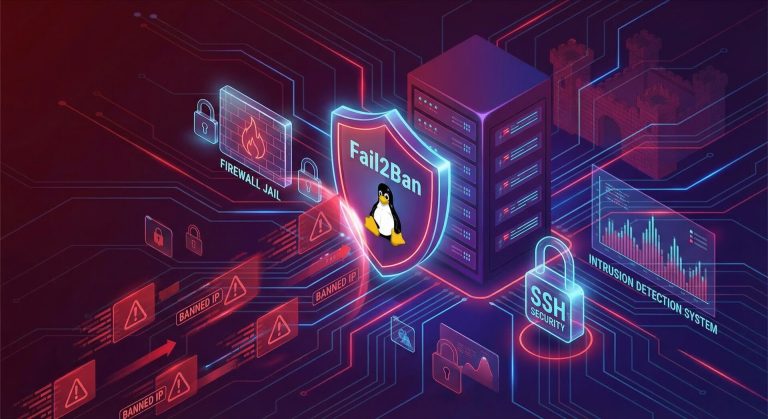
Introduction: Why Ubuntu Server Security Hardening Matters in 2026
If you’re running an ubuntu server security hardening should be your top priority. In 2026, server attacks have become more sophisticated, with automated bots constantly scanning for vulnerable systems. This comprehensive guide walks you through essential ubuntu server security hardening steps that protect your infrastructure from unauthorized access, brute-force attacks, and exploitation attempts.
Whether you’re managing Ubuntu 22.04 LTS, Ubuntu 24.04 LTS, or Debian-based servers, these battle-tested security measures will significantly reduce your attack surface. We’ll cover SSH hardening, firewall configuration, intrusion detection, automated patching, and advanced security controls that every system administrator should implement.
SSH Hardening: Your First Line of Defense
SSH (Secure Shell) is the primary attack vector for server breaches. Implementing proper SSH hardening is the most critical step in ubuntu server security hardening.
Generate and Deploy SSH Keys
Password-based authentication is inherently weak. SSH keys provide cryptographic security that’s virtually impossible to brute-force. Here’s how to set them up:
On your local machine:
ssh-keygen -t ed25519 -C "your-email@example.com"
This generates an Ed25519 key pair with strong entropy. Ed25519 is faster and more secure than traditional RSA keys.
Copy the public key to your server:
ssh-copy-id -i ~/.ssh/id_ed25519.pub user@your-server-ip
Alternatively, manually append the public key to ~/.ssh/authorized_keys on the server and set correct permissions:
chmod 700 ~/.ssh
chmod 600 ~/.ssh/authorized_keys
Disable Root and Password Login
Once SSH keys are working, disable password authentication entirely:
sudo nano /etc/ssh/sshd_config
Modify these critical settings:
PermitRootLogin no
PasswordAuthentication no
ChallengeResponseAuthentication no
PubkeyAuthentication yes
⚠️ Critical Warning: Test SSH key access in a separate terminal session BEFORE restarting SSH. If keys don’t work, you’ll lock yourself out!
sudo systemctl restart ssh
Optional: Two-Factor Authentication (2FA)
For maximum security, add TOTP-based 2FA:
sudo apt install libpam-google-authenticator -y
google-authenticator
Edit /etc/pam.d/sshd and add:
auth required pam_google_authenticator.so
Enable keyboard-interactive authentication in /etc/ssh/sshd_config:
KbdInteractiveAuthentication yes
Restart SSH to activate 2FA. You’ll now need both your SSH key AND your TOTP code.
UFW Firewall Configuration: Default-Deny Policy
A properly configured firewall is essential for ubuntu server security hardening. Ubuntu’s Uncomplicated Firewall (UFW) provides an intuitive interface to iptables.
Install and Enable UFW
sudo apt update
sudo apt install ufw -y
Start with a default-deny policy that only allows essential services:
sudo ufw default deny incoming
sudo ufw default allow outgoing
Allow Specific Services
For SSH access:
sudo ufw allow OpenSSH
Or specify a custom SSH port if you’ve changed the default:
sudo ufw allow 2222/tcp
For web servers (NGINX/Apache):
sudo ufw allow 'Nginx Full'
# or
sudo ufw allow 'Apache Full'
Enable the firewall:
sudo ufw enable
Verify status and rules:
sudo ufw status verbose
Rate Limiting for Brute-Force Protection
UFW can rate-limit connection attempts to SSH:
sudo ufw limit OpenSSH
This allows 6 connections per 30 seconds from a single IP, automatically blocking brute-force attempts.
Fail2Ban: Automated Intrusion Prevention
Fail2Ban monitors log files and automatically bans IPs showing malicious behavior—a crucial component of ubuntu server security hardening.
Install Fail2Ban
sudo apt install fail2ban -y
Configure SSH Protection
Create a local configuration file:
sudo nano /etc/fail2ban/jail.local
Add this configuration:
[DEFAULT]
bantime = 3600
findtime = 600
maxretry = 5
ignoreip = 127.0.0.1/8 ::1

[sshd]
enabled = true
port = ssh
logpath = /var/log/auth.log
maxretry = 3
bantime = 86400
This configuration:
- Bans IPs for 24 hours (86400 seconds) after 3 failed SSH attempts
- Monitors authentication logs
- Excludes localhost from bans
Start and enable Fail2Ban:
sudo systemctl start fail2ban
sudo systemctl enable fail2ban
Check ban status:
sudo fail2ban-client status sshd
Automated Security Updates
Unpatched systems are low-hanging fruit for attackers. Automated security updates are non-negotiable for ubuntu server security hardening.
Enable Unattended Upgrades
sudo apt install unattended-upgrades -y
sudo dpkg-reconfigure --priority=low unattended-upgrades
Edit /etc/apt/apt.conf.d/50unattended-upgrades to customize behavior:
Unattended-Upgrade::Allowed-Origins {
    "${distro_id}:${distro_codename}-security";
    "${distro_id}ESMApps:${distro_codename}-apps-security";
};

Unattended-Upgrade::AutoFixInterruptedDpkg "true";
Unattended-Upgrade::MinimalSteps "true";
Unattended-Upgrade::Remove-Unused-Dependencies "true";
Unattended-Upgrade::Automatic-Reboot "false";
This configuration:
- Installs security updates automatically
- Removes unused dependencies
- Avoids automatic reboots (configure based on your needs)
Manual Update Verification
Even with automation, periodically verify updates:
sudo apt update
sudo apt list --upgradable
sudo apt upgrade -y
Advanced Hardening Techniques
AppArmor Mandatory Access Control
AppArmor restricts application capabilities, limiting breach impact:
sudo systemctl status apparmor
sudo aa-status
Ensure critical services have enforced profiles. Ubuntu Security Guide (USG) automates AppArmor configuration for 20.04+ systems.
Docker Container Isolation
Run applications in isolated Docker containers behind an NGINX reverse proxy. This prevents direct exposure to the internet:
docker run -d --name myapp -p 127.0.0.1:8080:80 myimage
Configure NGINX to proxy requests to localhost:8080 instead of exposing container ports publicly.
Disable Unnecessary Services
Audit running services and disable unused ones:
systemctl list-units --type=service --state=running
sudo systemctl disable servicename
sudo systemctl stop servicename
Configure TLS for All Services
Use Let’s Encrypt for free TLS certificates:
sudo apt install certbot python3-certbot-nginx -y
sudo certbot --nginx -d yourdomain.com
Certbot automatically configures NGINX with strong TLS settings and handles renewal.
Monitoring and Auditing
Check Open Ports and Listening Services
ss -tuln
sudo netstat -tulpn
Investigate any unexpected listening services.
Review Authentication Logs
sudo tail -f /var/log/auth.log
sudo journalctl -u ssh -f
Watch for failed login attempts and unusual access patterns.
Install OSSEC for Intrusion Detection
OSSEC provides real-time log analysis and intrusion detection:
wget -q -O - https://updates.atomicorp.com/installers/atomic | sudo bash
sudo apt install ossec-hids-server -y
Debian-Specific Considerations
Debian servers follow identical ubuntu server security hardening procedures since both are Debian-based distributions. Key differences:
- Restart SSH with
sudo systemctl restart ssh(same as Ubuntu) - Use
aptinstead ofapt-get(both work) - Unattended-upgrades configuration is identical
- AppArmor is default on Ubuntu; SELinux is more common on Debian (but AppArmor works)
Ubuntu Security Guide (USG) Automation
For enterprise environments, Ubuntu Security Guide automates hardening and compliance auditing:
sudo apt install usg -y
sudo usg audit
sudo usg fix
USG applies CIS benchmarks, DISA STIG controls, and NIST standards automatically. It’s available for Ubuntu 20.04 LTS and newer.
Implementation Checklist
Follow this sequence for comprehensive ubuntu server security hardening:
- ✅ Generate SSH keys and copy to server
- ✅ Disable root and password login in sshd_config
- ✅ Configure UFW firewall with default-deny policy
- ✅ Install and configure Fail2Ban for intrusion prevention
- ✅ Enable unattended security updates
- ✅ Audit and disable unnecessary services
- ✅ Implement TLS for all web services
- ✅ Enable AppArmor profiles
- ✅ Set up log monitoring and alerts
- ✅ Schedule regular security audits
Related Security Resources
For complementary security practices, explore our guides on Debian Shell Script Security Best Practices 2026 and Linux Database Administration Security.
Additional external resources:
- Ubuntu Security Guide Official Documentation
- DigitalOcean Server Security Measures
- Linux Security Optimization Strategies
Conclusion: Maintaining Your Security Posture in 2026
Implementing ubuntu server security hardening is not a one-time task—it’s an ongoing process. In 2026, threat landscapes evolve rapidly, requiring continuous vigilance and adaptation.
The measures outlined in this guide—SSH hardening, firewall configuration, intrusion prevention, automated patching, and advanced controls—form a robust defense-in-depth strategy. Regular audits, log reviews, and staying current with security patches are essential maintenance activities.
Remember to test each security measure in a development environment before deploying to production. Document your configurations, maintain backups, and have a disaster recovery plan. With these practices in place, your Ubuntu or Debian server will be significantly more resilient against the security challenges of 2026 and beyond.
Start with SSH and firewall hardening today—these two steps alone eliminate the vast majority of automated attacks. Then progressively implement the remaining measures for comprehensive protection.

Hi, I’m Mark, the author of Clever IT Solutions: Mastering Technology for Success. I am passionate about empowering individuals to navigate the ever-changing world of information technology. With years of experience in the industry, I have honed my skills and knowledge to share with you. At Clever IT Solutions, we are dedicated to teaching you how to tackle any IT challenge, helping you stay ahead in today’s digital world. From troubleshooting common issues to mastering complex technologies, I am here to guide you every step of the way. Join me on this journey as we unlock the secrets to IT success.